
A Nutritionist’s Guide to Building a Balanced One-Pot Meal by Jenny Tschiesche

One-pot meals are some of the most useful meals I make. They are practical, easy to adapt and, with a bit of planning, can provide a good balance of protein, fibre, vegetables and satisfying carbohydrates. The key is knowing what to put in the pot.
I tend to use a simple checklist rather than following strict rules. Start with a source of protein, add plenty of plants, include a carbohydrate that suits the dish, then use herbs, spices and healthy fats to bring everything together.
Start With Protein
Protein helps make a meal more substantial and provides the amino acids our bodies need for the maintenance of muscle and other tissues. This becomes particularly relevant as we get older because maintaining muscle mass matters for strength, mobility and healthy ageing.
Good protein options for one-pot meals include chicken, turkey, fish, eggs, lentils, chickpeas, beans, tofu and tempeh. You do not necessarily need one large piece of meat or fish either. I often combine a smaller amount of animal protein with pulses. Chicken with cannellini beans, for example, or turkey mince with lentils. This adds fibre and plant diversity while still providing plenty of protein.

Add More Than One Vegetable
One-pot cooking is also an easy opportunity to get several different plants into one meal. Rather than thinking about adding “a vegetable” per se, I tend to look at what combination will work with the dish. For example:
In a chilli: Onion, peppers, tomatoes, sweetcorn and beans.
In a curry: Onion, tomatoes, spinach, cauliflower and chickpeas.
In a stew: Carrots, celery, onions, mushrooms and beans.
Don’t forget that frozen vegetables count too. Frozen soffritto (a mix of onion, carrot and celery), frozen garlic and ginger, peas, spinach, green beans and mixed vegetables are useful ingredients to keep available. Tinned tomatoes are another one-pot staple I use regularly. It doesn’t need to be complicated. The aim is simply to make plants a significant part of the meal rather than something added at the side afterwards.

Think About Fibre
Fibre is one of the things I actively consider when building meals. UK adults are advised to aim for around 30g of fibre a day, yet the vast majority of people are not reaching that amount. One-pot meals make increasing fibre relatively straightforward because several fibre-rich ingredients work particularly well in this style of cooking. Try adding lentils, chickpeas, butter beans, cannellini beans, black beans, pearl barley, brown rice, bulgur wheat, vegetables and herbs.
Pulses are particularly useful because they contribute both protein and fibre. Even if you are making a meat-based dish, adding a tin of beans or a handful of lentils can make it go further while increasing the fibre content of the meal.

Choose Your Carbohydrate
Carbohydrates do not need to be avoided to make a meal healthy. Potatoes, rice, barley, pasta and other grains can all form part of a balanced meal. I simply think about what works best for that particular dish. Pearl barley is excellent in stews and risotto-style dishes. Brown rice works well with curries and chilli. Potatoes can be cooked directly in soups, stews and casseroles. You can even serve the one-pot dish with wholegrain bread/ pitta bread, rice or another carbohydrate if cooking everything together doesn’t suit the recipe. Remember that beans and lentils contribute carbohydrate as well as protein and fibre.

Don’t Forget Fat!
Fat adds flavour and helps us absorb certain fat-soluble nutrients. Extra-virgin olive oil is one of my most-used ingredients, particularly with tomato, bean and vegetable-based dishes. Other options include nuts (or nut butters), seeds, tahini, avocado, natural yoghurt and grated cheese.
Sometimes these are better added at the end rather than cooked in the pot. A spoonful of yoghurt over a curry, some toasted seeds over soup or a little grated cheese over a bean stew can completely change a meal.
Use Herbs and Spices Generously
Healthy food still needs to taste good. Herbs, spices, garlic, ginger, chilli, mustard, lemon and vinegar can add a great deal of flavour without making recipes unnecessarily complicated. One reason I like pressure cooking is that ingredients cook together, which allows flavours to develop throughout the dish. A well-stocked spice cupboard can also make the same basic ingredients feel completely different. Chickpeas and tomatoes could become a Mediterranean-style stew with oregano and olives, or a curry with cumin, turmeric, coriander and ginger.
My One-Pot Formula

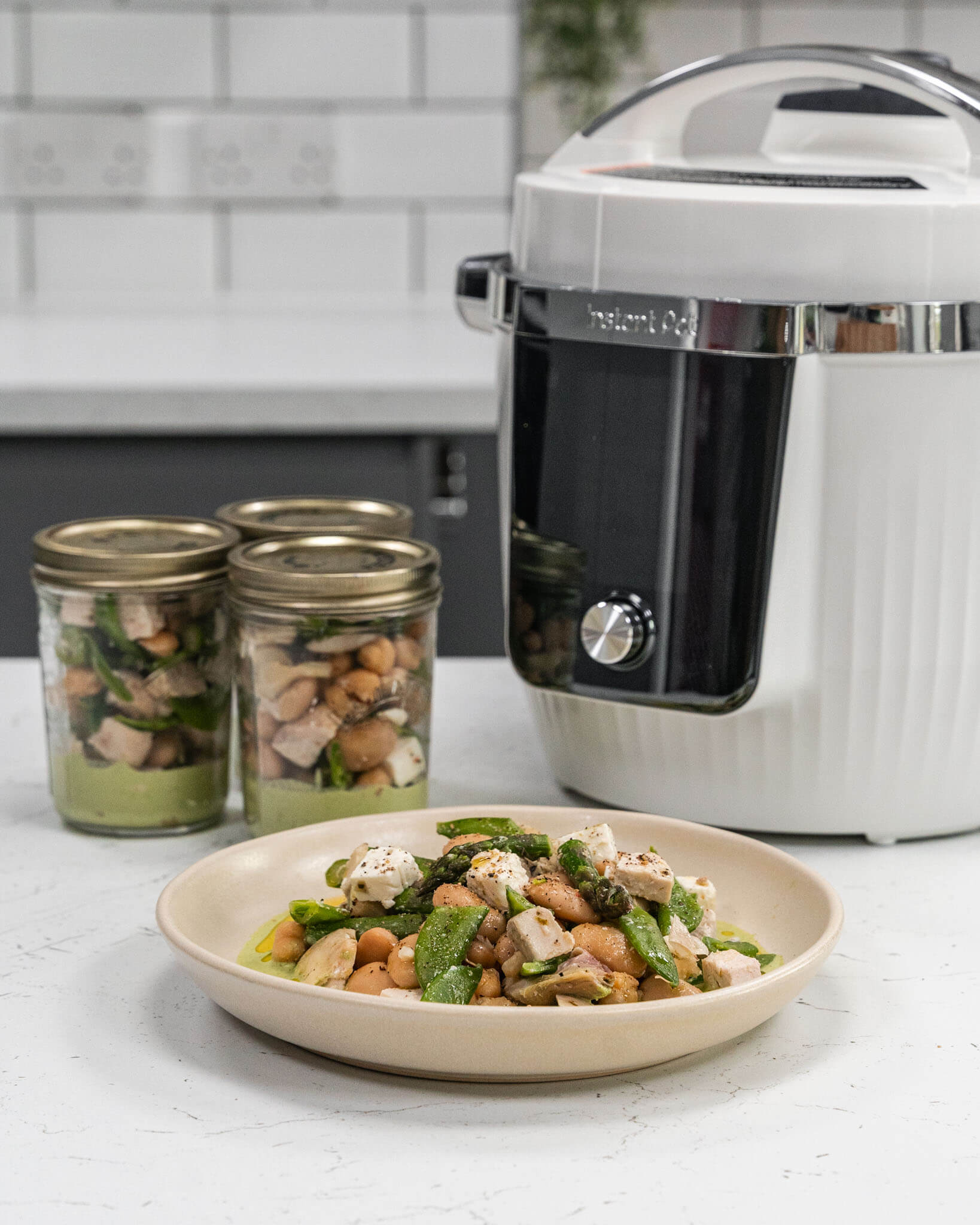

So, if I am making something without a recipe, this is roughly what I think about:
Protein + vegetables + fibre-rich carbohydrate + flavour + healthy fat
For example:
Chicken + butter beans + tomatoes + peppers + spinach + olive oil
Or:
Lentils + chickpeas + cauliflower + tomatoes + brown rice + spices
Or:
Pearl barley + butter beans + mushrooms + spinach + herbs + Parmesan
This is not a rigid formula. Some ingredients fall into several categories. Beans provide both protein and carbohydrate, for example, while also being an excellent source of fibre. That flexibility is actually what makes one-pot meals so useful.


